
Blog
Red Seal Notary Tutorial: What Does it Mean to “Notarize” or “Certify” a Document?
March 15, 2013

[updated with some clarifications February 12, 2018]
You may have been asked by a government agency, a prospective employer, or a university to have a document you are presenting to them “notarized” or “certified,” but you haven’t been given any instructions, and you are completely baffled as to what is actually required.
Don’t worry. Red Seal Notary can help.
Here is a brief tutorial to help you wade through the, often confusing, terminology.
Notarizations
Broadly speaking, a ‘notarization’ is any official act of a Notary. The usual purpose of notarizing a document is to ensure that the person or persons signing a document are who they say they are. The notary accomplishes this by viewing the person’s non-expired, government-issued photo ID, such as a driver’s license or passport, observing the signing of the document, and comparing the signature with that on the ID. The notary will then sign it and affix an embossed seal to the document. In practice, this means it is much more difficult for signatories to claim that they did not sign the document later.
It is important to note that a notary public cannot attest to the validity of the document’s contents, but only to the validity of the signature of the person signing.
Certified True Copies
A ‘certified’ copy is a specific type of notarization. It is the only official act of a notary that does not require the physical presence of a signatory. Instead, it requires the presence of the original document.
If you have been asked to provide someone with an original document, such as your college diploma or marriage certificate, and you’d rather not relinquish the original, you can usually substitute a ‘certified true copy’, ‘certified copy’, or ‘notarized copy’. All three terms refer to the same thing.
A notary public can make a copy of your original document and certify it as being a true copy of the original. You may request as many certified copies as you wish, which may be a good idea in the event you are dealing with, or applying to, more than one body or agency.
In most cases, the notary will be able to make your copies in his or her office. But sometimes an original document, such as a diploma or architectural drawing, is too large, or you may simply prefer to have a high resolution colour copy produced by a professional copy shop. If so, you will need to bring your original documents, along with the copies, to the Notary. If the Notary cannot make the copies, allow extra time as the Notary will then have to compare the copies to the original document.
What’s the difference between a “notarized” and a “certified” document?
Sometimes, you may be asked to have an original document “notarized,” as opposed to “certified” as a true copy. But an original document that has already been signed by the issuer cannot be notarized unless it is signed in the presence of the notary.
We suggest you clarify this with the requesting party in the event they are using the wrong terminology and do not actually mean “notarized” but rather “certified” true copy.
Or perhaps, your notarized documents are also to be “authenticated” and “legalized” for use in another country. You might have been instructed to take them to an ‘Apostille”. For more information on Red Seal Notary’s Authentication and Legalization Services, please click here.
To book an appointment with Red Seal Notary, please call 1-888-922-7325 or complete our online appointment request form located here.
We look forward to serving you.
Recent Posts

How to Fill Out an Affidavit of Service form in Ontario?
Completing an Affidavit of Service form in Ontario requires attention to detail and a clear understanding of its purpose in the court process. The affidavit is the official proof that you delivered legal papers to another party. Different courts in Ontario have their own Affidavit of Service forms, which can be found on the courts’ […]
Read More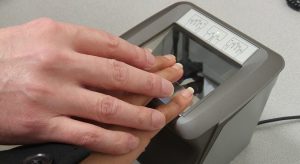
How Can I Get Fingerprinted in Canada?
Fingerprinting is an essential step in various legal and administrative procedures in Canada. Understanding the process can save you time and effort, whether you need it for immigration, employment, or background checks. This guide breaks down everything you need to know about getting fingerprinted in Canada, including the methods, steps, and special considerations, ensuring you […]
Read More
What Is an Affidavit Used for in Ontario?
An affidavit is a written statement of facts that is made under oath or affirmation. In Ontario, this legal document plays a key role in various legal, administrative, and personal matters. An affidavit provides a reliable way to present evidence and verify information in situations where a clear, written record is necessary. This article explains […]
Read More
What is RCMP Private Fingerprinting Company Accreditation?
Fingerprinting services are essential for a variety of purposes, including employment, immigration, and legal proceedings. In Canada, the Royal Canadian Mounted Police (RCMP) accredits private companies to offer secure and reliable fingerprinting services. These companies use advanced technology to capture and submit fingerprints electronically, ensuring compliance with Canadian regulations. Among these providers, Red Seal Notary […]
Read More